Elementary
Workbook Resources
We are here to help you fully integrate The Motion of Gratitude guidebook into your classroom or home setting! To ensure that you have everything you need to guide students through their gratitude and mindfulness practice, we’ve created this dedicated page for you! Whether you’re a teacher or a parent, you’ll find tools and guidance to make this experience smooth and impactful for everyone involved.
What To Expect:
- Pre- and Post-Experience Assessments To measure the impact of the gratitude journey on students, we offer both pre- and post-experience assessments. These assessments help you gather insights into students' experience before and after completing the four-week program.
- Mindfulness Practices Throughout the workbook we have written out the mindfulness practice- We have also recorded versions for you to listen to together or in your own time! You can find all practices referenced in this book on this page!
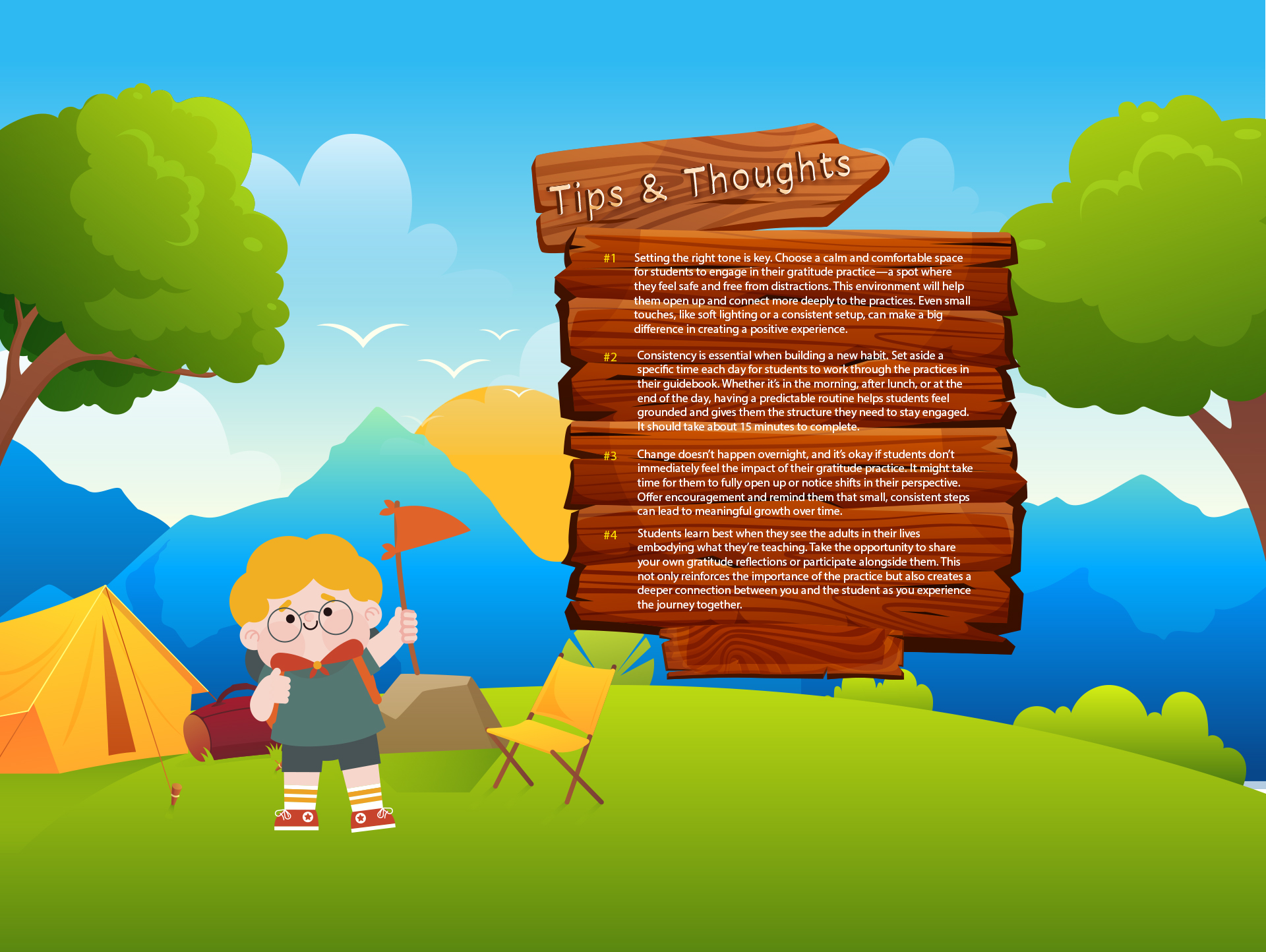
- Classroom/At Home Tips Looking to add more than the workbook? We have some ideas for you! You will find suggestions for creating a gratitude-friendly environment, including ideas to incorporate into your routine and ways to make gratitude a regular part of your students’ day.
Pre-Experience Assessment
This helps set a baseline for students’ understanding of gratitude, mindfulness, and to get an understanding of how they are feeling coming into the experience.
Post-Experience Assessment
Gauge the impact of the practices and how students are feeling after spending four weeks being intentional with gratitude and mindfulness practices.
Mindfulness Practices
Connecting to Your Breath (4-2-6 Breath Practice)
Week 2 Video
This simple breath practice helps you slow down and connect to the present moment. By inhaling for four seconds, holding for two, and exhaling for six, you signal safety to your nervous system, bringing calm and clarity. Use this as a tool throughout your day to reset, refocus, and return to a place of balance.
Loving-Kindness Meditation
Week 3 Video
This guided practice cultivates feelings of compassion, empathy, and gratitude—both for yourself and others. By directing kind and loving thoughts inward and outward, you expand your capacity for connection and create a ripple effect of positivity. Let this practice remind you of the power of presence and heartfelt intention in your daily interactions.
Heart Coherence Practice
Week 4 Video
Heart coherence is the practice of aligning your breath with your heart rate, creating a state of balance and inner peace. By focusing on slow, intentional breathing and feelings of gratitude, you support your nervous system, reduce stress, and increase clarity. This simple yet powerful practice helps you feel centered and aligned throughout your day.
Frequently Asked Questions
Each daily practice is designed to take about 15 minutes. This time includes a combination of reflection, writing, and mindfulness exercises, making it easy to incorporate into your daily routine.
After four weeks, many students begin to notice shifts in their mindset and behavior. They may feel more present, express greater gratitude, and develop a deeper awareness of the positive aspects of their lives. While every student’s journey is unique, these practices can lay the foundation for lasting personal growth.
This program helps students build emotional resilience, increase self-awareness, and cultivate a positive mindset. Research shows that gratitude practices can improve mental, emotional, and even physical well-being. Students may experience improved focus, enhanced relationships, and greater overall happiness.
The program is thoughtfully designed to guide students through each practice step by step, eliminating the need for you to teach or prepare any lessons. Each day includes a combination of a short lesson and a practice, allowing students to independently read and complete the activities at their own pace. Your role is to create the time, space, and intention for them to engage with the program. Your support and encouragement, along with fostering consistency and modeling gratitude in your own life, will greatly enhance the overall experience.
For the mindfulness practice, what do I need to do?
For the mindfulness practice, you have options depending on your setting and preference. You can play the mindfulness practice audio aloud for the group, which is a great way to set the tone and provide guided support for students. Alternatively, you can create time and space for students to lead the practice themselves or engage in it independently. Either approach works, so feel free to choose what best suits your classroom or group dynamic.
It’s completely normal for students to need time to get comfortable with these new practices. Encourage patience and remind them that growth takes time. Creating a consistent routine and modeling gratitude in your own life can help them stay engaged and find meaning in the process.
Yes! While this page focuses on middle school-aged resources, the practices in the program are designed to be flexible and adaptable for different age groups. Whether your student is new to gratitude or already familiar with the concept, these tools meet them where they are.
Absolutely. The practices can be shared in a classroom, small group, or family setting. Group discussions can deepen the experience by allowing students to share their reflections and learn from one another.
Frequently Asked Questions
Each daily practice is designed to take about 15 minutes. This time includes a combination of reflection, writing, and mindfulness exercises, making it easy to incorporate into your daily routine.
After four weeks, many students begin to notice shifts in their mindset and behavior. They may feel more present, express greater gratitude, and develop a deeper awareness of the positive aspects of their lives. While every student’s journey is unique, these practices can lay the foundation for lasting personal growth.
This program helps students build emotional resilience, increase self-awareness, and cultivate a positive mindset. Research shows that gratitude practices can improve mental, emotional, and even physical well-being. Students may experience improved focus, enhanced relationships, and greater overall happiness.
The program is thoughtfully designed to guide students through each practice step by step, eliminating the need for you to teach or prepare any lessons. Each day includes a combination of a short lesson and a practice, allowing students to independently read and complete the activities at their own pace. Your role is to create the time, space, and intention for them to engage with the program. Your support and encouragement, along with fostering consistency and modeling gratitude in your own life, will greatly enhance the overall experience.
For the mindfulness practice, what do I need to do?
For the mindfulness practice, you have options depending on your setting and preference. You can play the mindfulness practice audio aloud for the group, which is a great way to set the tone and provide guided support for students. Alternatively, you can create time and space for students to lead the practice themselves or engage in it independently. Either approach works, so feel free to choose what best suits your classroom or group dynamic.
It’s completely normal for students to need time to get comfortable with these new practices. Encourage patience and remind them that growth takes time. Creating a consistent routine and modeling gratitude in your own life can help them stay engaged and find meaning in the process.
Yes! While this page focuses on middle school-aged resources, the practices in the program are designed to be flexible and adaptable for different age groups. Whether your student is new to gratitude or already familiar with the concept, these tools meet them where they are.
Absolutely. The practices can be shared in a classroom, small group, or family setting. Group discussions can deepen the experience by allowing students to share their reflections and learn from one another.